


What Is UL Certification? Why It Matters for E-Bikes
Updated: Author: ErpanOmer
UL certification is a third-party safety stamp. It means an e-bike's electrical system has been tested for things like overheating, electrical failure, and battery hazards. For riders in the U.S., UL-certified e-bikes have become a key safety benchmark—especially as lithium-ion battery incidents keep raising concerns.
This guide breaks down what UL certification actually means for e-bikes, why it's become the go-to safety standard in the U.S., and how it protects both your home and your investment.
What Is UL Certification for E-Bikes?
To get why your e-bike stays safe during heavy use and charging, it helps to understand what goes on behind the scenes. UL certification is a voluntary safety stamp from Underwriters Laboratories—a global safety outfit that tests and inspects electrical products to make sure they meet strict standards. For e-bikes, this isn't just checking a single wire or component. It involves extensive safety testing of the complete electrical system under different fault and stress conditions under extreme conditions. The goal? Make sure everyday wear and tear doesn't turn into a hazard sitting in your garage or apartment.
Which UL Standards Apply to E-Bikes?
Safety standards can feel like alphabet soup, but the industry uses a few specific benchmarks to assess micromobility risks. Different certifications cover different parts of the vehicle from the battery cells themselves to the entire electrical system working as a whole. Here's a quick breakdown of the three main standards you'll run into when shopping for an e-bike in the U.S. market.
UL 2849: E-Bike Electrical Systems
UL 2849 is the most complete standard because it looks at the whole electrical system, not just the battery. Motor, controller, charger, battery—all tested together to see how they work and handle stress. That way, even if software glitches or voltage spikes, you won't get a major failure while riding or charging overnight.
UL 2271: E-Bike Batteries
UL 2271 evaluates battery packs used in light electric vehicles, including electric bike batteries, and tests protection against hazards such as overcharging, short circuits, and mechanical stress. It tests how it handles physical and electrical stress. Crushing, heavy vibration, temperature cycling, overcharging—they put it through all of it. If it passes, it's proven tough enough for rough roads and temperature changes you'd see on a typical American commute.
UL 2272: Micromobility Devices
UL 2272 is for hoverboards, scooters, and those self-balancing things. It's kind of related to e-bike standards, but it only became a thing after all those hoverboard fires a few years back. Bottom line: some parts use the same rules, but regular pedal-assist e-bikes don't usually run on this one.
UL 2849 vs. UL 2271 vs. UL 2272
To help you sort out these technical standards when you're reading product specs, we've put together a quick comparison table below. It breaks down the key differences, what types of products each one applies to, and what exactly they cover in terms of safety.
| Standard Focus | Applicable Products | Testing Scope | Main Safety Risks Covered | Relevance to E-Bikes |
|---|---|---|---|---|
| UL 2849 | Electric Bicycles (Pedal-assist and throttle) | Full electrical system (motor, battery, controller, charger) | System-wide thermal runaway, electrical shock, mechanical failure | The gold standard for complete e-bike system safety. |
| UL 2271 | Light Electric Vehicle (LEV) Batteries | Battery pack components and assembly only | Overcharging, short circuits, crushing, vibration, dropping | Crucial for ensuring the battery pack itself is stable and safe. |
| UL 2272 | Hoverboards, E-Scooters, and Micromobility Devices | Drive train and electrical system combination | Electrical fire hazards, water ingress, structural stress | Primarily for e-scooters and hoverboards, not standard e-bikes. |
Why UL Certification Matters for E-Bikes
Once you see how these standards differ, it's obvious why a certified bike matters. Lithium-ion batteries pack a ton of power into a tiny space. That's great for performance, but it means the engineering has to be solid. If an uncertified or badly made battery fails, it can go into thermal runaway—a fast, self-feeding fire a regular extinguisher can't handle. Paying a little more for a UL-certified e-bike buys you peace of mind. It protects your home, your family, your neighbors—and your wallet too.
Is UL Certification Required for E-Bikes?
Given how serious the risks are with uncertified batteries, the legal landscape in the U.S. is shifting fast. There's no federal law yet that requires all e-bikes to be UL certified, but some e-bike regulations are already starting to move in that direction. New York City, for example, passed a law banning the sale, lease, or rental of e-bikes and other mobility devices that don't meet UL 2849 or UL 2271. A lot of industry watchers think other big cities and states will follow. That means UL compliance could soon become the minimum standard just to ride legally in urban areas.
How to Check Whether an E-Bike Is UL Certified
As local rules tighten up, riders who know what they're doing need to be able to tell real safety compliance from marketing fluff. Unfortunately, there are sellers out there who'll slap on a fake-looking logo or toss out phrases like "built with UL cells" just to make a sale. Don't fall for it. To make sure you're getting a genuinely certified e-bike, look for these signs:
- Look for the UL certification mark, model information, or certification details provided by the manufacturer. A legit certified bike has one on the frame, battery, or charger port. It's tamper-proof, says "CERTIFIED," and has a file number. No sticker? Looks fake? Stay away.
- Go to the UL website and check the Product iQ database. It's free. Type in the manufacturer's name or the file number from the sticker. You'll know in seconds if it's real.
- Check the charger and the manual too. A fully certified system will have UL marks on the charger itself, and the documentation should spell out the safety certifications. If they're missing or something looks off, that's a red flag. Don't ignore it.
How to Choose a Safer UL-Certified E-Bike
Know how to check certifications, and you won't get fooled when picking a bike. But which model to buy? That depends on how the safety features fit your daily routine and where you'll store it. These three steps will help you decide.
Check for UL 2849 Certification
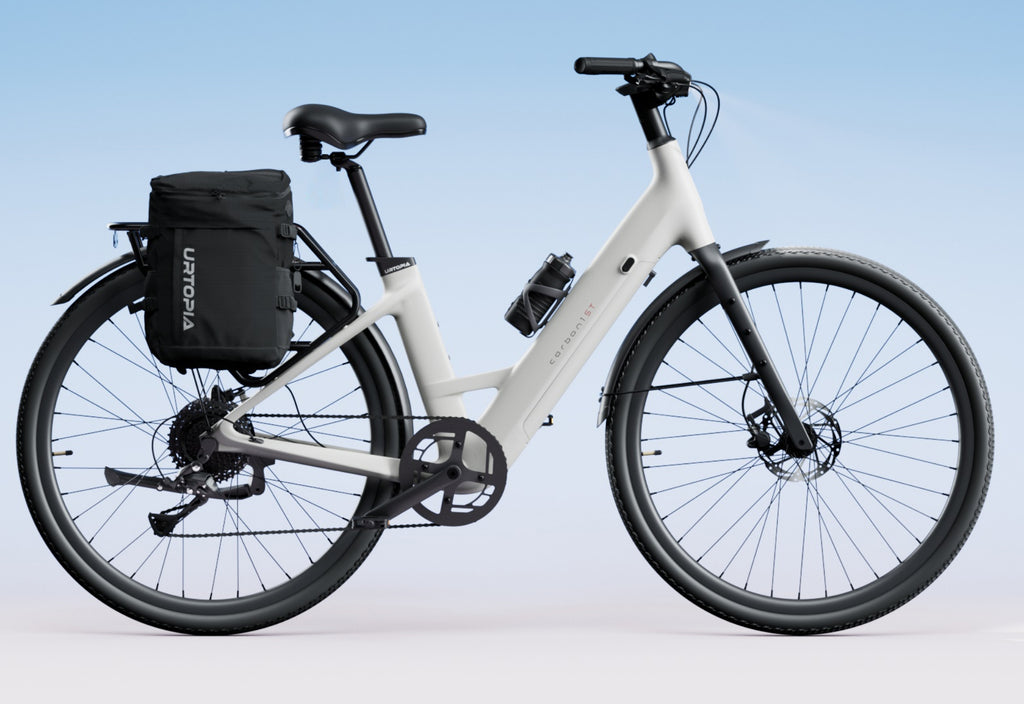
If you want to see how these safety standards come together in a real daily rider, the Carbon 1 Step-Thru E-Bike is a solid example.
Safety isn't an afterthought here. It's got a full UL 2849 certified electrical system, powered by a Samsung Li-ion battery. But what really sets it apart for city riders is how it pairs that heavy-duty protection with Urtopia's carbon fiber frame and fork. At just 36 lbs without accessories, it blows the stereotype of a clunky 36lbs e-bike out of the water. You can carry it up apartment stairs or tuck it into a tight office corner without breaking a sweat.
Beyond the electrical safety, the Carbon 1 Step-Thru also comes with smart features, including GPS tracking and anti-theft alerts built right in. So you're covered at home and on the street.
Whether you're charging it at home or weaving through city traffic with that smooth torque sensor, it's a ride that gives you peace of mind, easy portability, and smart tech all in one package.
Confirm Battery and Charger Compatibility
Always use the charger that came with your bike—the one the manufacturer gave you. Mixing chargers or buying a cheap one online is one of the main reasons batteries overcharge and catch fire. Doesn't matter how good the bike is if you plug in the wrong charger.
Follow Safe Charging Practices
Even a certified battery needs common sense when you charge an electric bike. Don't charge it while you're asleep. Don't leave it plugged in for days. Charge it on a hard surface, away from stuff like couches or rugs. And never block your door with a charging bike—if something happens, you need to get out fast.
FAQ
Is UL the same as CE?
No, they're completely different. UL is a U.S.-based third-party safety certification. CE is a mandatory self-declaration mark for selling products in Europe. UL involves independent lab testing; CE is basically the manufacturer saying "we think this meets the rules."
Are UL-certified e-bikes more expensive?
Usually, yes. The engineering and testing that go into UL certification cost money. That said, paying a little more upfront is a smart move—it lowers your risk of a battery fire or an expensive replacement down the road.
Does UL certification make an e-bike completely fireproof?
No. But it does make electrical fires a lot less likely under normal use—and even under some rough use. That said, physical damage, water exposure, or using unapproved parts can still cause problems.
Does UL certification cover the motor performance of an e-bike?
No. UL certification is about electrical safety—not how fast the bike goes or how much torque it puts out. It's there to make sure the motor doesn't overheat, short out, or catch fire under load.
Does UL certification cover the brakes, tires, or frame?
No. UL 2849 focuses on the electrical system and battery. Mechanical stuff, brakes, tires, frame strength, falls under other standards like ISO or CPSC.
Conclusion
As e-bikes keep changing the way Americans get around and explore their cities, putting safety first is the smartest thing any rider can do. Going with a model that has full UL certification protects your home, your investment, and your peace of mind. Pay attention to the right standards, verify those labels, and charge responsibly. That way, you get all the freedom and fun of electric riding without the worry.


