


E-Bike for Fishing: Best Picks for Anglers in 2026
Updated: Author: ErpanOmer
Fishing spots rarely come easy. The better ones usually sit farther out, down a gravel track, along a lakeside road, or just far enough past the parking area that hauling rods, tackle, and extra gear starts wearing you down before the day even gets going. That takes a toll fast. Distance matters. Effort matters too.
An electric bike can ease a lot of that strain and make the ride in feel much more manageable, but the right pick still depends on how you ride, the ground you usually cross, and how much gear you normally bring. Get those three things clear. Then the best options start to stand out.
Key Benefits of Using an E-Bike for Fishing
An e-bike changes more than just how fast you get there. It makes the whole fishing trip easier to manage.
Easier Access to Fishing Spots
Crowded parking lots get old fast. So does the long, awkward walk in with heavy waders pulling at every step. An e-bike changes the trip. You can slip down narrow trails, get through gated access roads a truck cannot use, and reach the riverbank sooner. You also save your energy for the fishing itself.
Carry More Fishing Gear
Fishing gear gets heavy fast. One rod helps. A small bag helps too. Then the extras pile on. Tackle. Tools. An extra layer. Snacks. Water. Sometimes even a cooler. Now the load feels different. A well-built e-bike fixes that fast. Strong carrying capacity helps. Good cargo options help too. Add a rear rack, basket, or panniers, and you can bring the full setup, keep everything steady, and save your energy for the water. Not the ride in.
More Comfort for Longer Trips
Long rides take a lot out of you. Turn on pedal assist, and you can roll in with energy still in the tank instead of showing up drained after a tough climb.
Handle Rough Terrain More Easily
Mud, sand, and loose gravel are the natural enemies of standard bikes. One of the benefits of fat tire bikes is that they can float over this kind of terrain more easily, helping fishing e-bikes handle obstacles that might otherwise stall your trip.
How to Choose the Best Fishing E-Bike in 2026
Not every e-bike works well for fishing. Some do. Some fall short. The right pick comes down to how far you ride, the kind of ground you cross, and how much gear you usually haul with you.
Motor Power
For fishing, more motor support usually makes a real difference. A mid-drive motor often feels like the stronger choice, though a more powerful hub motor can also do the job well. Once you load the e-bike up with gear, the ride changes fast. Steep banks feel steeper. Mud feels heavier. Soft ground near the water can slow you down in a hurry, so having extra power helps you keep moving without fighting the e-bike the whole way.
Battery Range
A longer battery range gives you more flexibility. Fishing trips can stretch out, and plans often change once you are out there. You may move between spots, stay longer than expected, or cover more ground than you first had in mind. With more range, a full day feels easier and a lot less rushed.
Tire Grip
Fat tires are the gold standard for anglers, and a fat tire electric bike gives riders the stability they need on slippery docks and soft sand.
Gear Capacity
Fishing gear can pile up fast, so cargo space is something worth checking closely. Look at the e-bike's total payload, whether it supports racks, and how easy it is to attach bags or other add-ons. For a lot of anglers, an e-bike that helps keep gear packed and organized is more useful than one that puts most of its focus on speed or keeping weight low.
Best E-Bikes for Fishing in 2026
Know your priorities. The list shrinks fast. Some e-bikes grip rough access paths better and stay steady when the trail turns uneven, while others suit longer rides or carry heavier gear without making the whole trip feel like a grind. Think about how you actually fish. That is usually what makes the right options stand out.
Urtopia Joy Carbon Fat Tire E-Bike

Urtopia Joy Carbon Fat tire E-Bike is the most utility-minded option of the four. It makes the most sense when the ride to the water includes mixed surfaces and a meaningful amount of gear, because it combines fat-tire stability with a lighter carbon build and a cargo-friendly setup.
Key features
- 45 lbs net weight.
- Up to 70 miles of range.
- 330 lbs total weight limit.
- 20 x 3.0 inch puncture-proof fat tires for more grip on rougher access routes.
Carbon Joy Ultra E-Bike
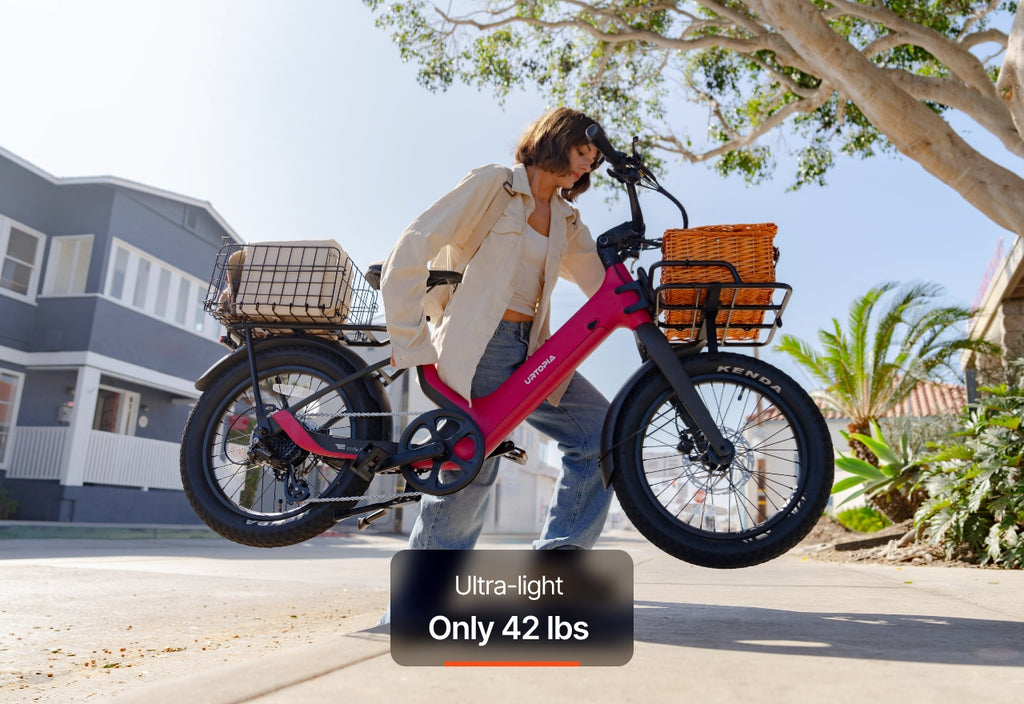
Carbon Joy Ultra E-Bike leans more toward comfort than utility styling. It suits relaxed rides to the lake, waterfront paths, campground roads, and other routes where an easy, upright feel matters as much as off-pavement ability.
Key features
- 42 lbs net weight.
- Up to 70 miles of range.
- 330 lbs total weight limit.
- 0 to 60-degree adjustable cruiser handlebars and a wide cushioned saddle for a more relaxed riding position.
Carbon Fusion Pro E-Bike

Carbon Fusion Pro E-Bike fits better when the fishing trip starts with more miles. It is the distance-focused choice here, with a setup that feels better suited to longer approaches, moving between spots, and full-day outings where range matters more than fat-tire flotation.
Key features
- 48 lbs net weight.
- Up to 75 miles of range, or up to 120 miles with the dual-battery setup.
- 29 x 2.05 inch puncture-proof tires with a 60 Nm suspension fork for mixed-surface riding.
- Optional Rear rack that supports up to 60 lbs.
Carbon Fusion GT E-Bike

Carbon Fusion GT Dual Motor E-Bike leads this group on sheer muscle. It brings the most power and the most edge, which makes it a stronger fit for rougher routes, steeper sections, and riders who want the e-bike to stay planted, responsive, and fully up to the task once the load starts to build.
Key features
- 55 lbs net weight.
- 700W rear hub motor with 900W peak power and 80 Nm of torque.
- Up to 70 miles of range, or up to 120 miles with the dual-battery setup.
- Rear rack supports up to 60 lbs, with a total weight limit of 330 lbs.
Quick Comparison of the Best E-Bikes for Fishing in 2026
All four have something going for them. Put them side by side, though, and the differences show up fast. Weight matters. Range does too. Cargo support, tire setup, and the kind of ride each e-bike handles best all shape the choice.
| Model | Net Weight | Max Range | Weight Limit / Cargo Support | Best For |
|---|---|---|---|---|
| Urtopia Joy Carbon Fat Tire E-Bike | 45 lbs | Up to 70 miles | 330 lbs total weight limit | Mixed surfaces and gear-heavy fishing trips |
| Carbon Joy Ultra E-Bike | 42 lbs | Up to 70 miles | 330 lbs total weight limit | Relaxed rides to lakes, waterfront paths, and campground roads |
| Carbon Fusion Pro E-Bike | 48 lbs | Up to 75 miles, or up to 120 miles with dual battery | Optional rear rack supports up to 60 lbs | Longer approaches, moving between spots, and full-day outings |
| Carbon Fusion GT Dual Motor E-Bike | 55 lbs | Up to 70 miles, or up to 120 miles with dual battery | Rear rack supports up to 60 lbs; 330 lbs total weight limit | Rougher routes, steeper sections, and heavier loads |
Each e-bikes suits a different kind of fishing trip. Comfort matters to some riders. Range matters more to others. Cargo support can change the whole ride, and tougher routes often push performance higher on the list.
Tips for Using an E-Bike on Fishing Trips
The e-bike itself matters, but how you use it matters too. A few simple habits can make fishing rides smoother and easier on the e-bike.
Secure Your Gear
Loose gear gets ugly fast. Hit a patch of rough ground and rods, tackle, and extra supplies start sliding, bouncing, and shifting before you can react, which throws off the ride and turns a simple carry into a mess. No room for that. Strap everything down before you move.
Check the Battery
Think about the whole trip, not just the ride to the water. Wind, gear weight, terrain, and throttle use can all reduce the real-world range of electric bike batteries, so starting fully charged gives you more flexibility.
Clean After the Trip
Mud, sand, and shoreline grit wear parts down fast when you let them sit on the e-bike after a ride. Wipe it down. Check the tires, the brakes, and the drivetrain, and you can head off a lot of wear before it turns into bigger trouble.
FAQ
Are e-bikes allowed on fishing trails or near lakes?
One trail may welcome e-bikes anywhere a regular bike can go, while a nearby park may restrict them or block them outright. Check before you ride. A quick look at the local rules can save you a wasted trip.
Do I need a fat tire e-bike for fishing?
Not always. Fat tires shine when you ride through sand, loose gravel, rough access roads, or soft ground that can drag a standard bike down fast and turn an easy ride into more work than it should be. Firm ground changes the picture. Spend most of your time on pavement or harder trails, and an all-terrain e-bike with narrower tires can still get the job done just fine, so the smarter choice comes from the surfaces you actually ride, not the setup that simply sounds better on paper.
Can I carry rods, tackle, and a cooler on an e-bike?
Yes, provided the bike can take the load and you strap everything down properly. That is the real issue. Payload capacity matters. Rack support matters. A stable setup matters. Top speed does not tell you much if the bike struggles once you pile on the gear.
Are fishing e-bikes hard to maintain after mud or sand exposure?
Usually not. Clean the bike soon after the ride, and you will avoid most of the headaches that mud, grit, and moisture can cause, even though sealed motors and batteries already give modern e-bikes a solid layer of protection. Let that mess sit, and parts wear down fast. Wipe it off. Add a little chain lube. Clear sand out of the moving parts early, and you will save yourself a lot more trouble later.
Conclusion
A good e-bike changes the trip from the start. You cover more ground. You haul more gear. You reach the water with more energy still in the tank for the part that actually matters, and that alone can change how the whole day feels. Route matters. Load matters. What you choose should match the ground you ride, the weight you bring, and the thing you care about most, whether that means better traction, more comfort, longer range, or stronger climbing power. Get the setup right, and the ride stops feeling like work.


