


What Are the Different Classes of eBikes: Key Differences
Updated: Author: ErpanOmer
Electric bikes have also been experiencing an increment in their use as one of the most convenient, efficient, and environmentally friendly transportation methods. E-bikes provide the rider with the potential of covering more distance and speed with minimal physical effort regardless of riding as a means of commuting, recreation and fitness. Due to the development of the industry, governments and transportation regulating bodies have also come up with a standardized system of classification to control the manner in which the electric bicycles operate in the public roads and trails.
The various classes of the e-bikes are essential to new and experienced users. All kinds of motors specify how the motor will support the rider, the highest speed he can move with it, and under which circumstances the bike can be ridden. Such differences will enable the riders to choose the right ebike that will fulfill their needs and, simultaneously, be within the framework of the domestic law.
What Are Ebike Classes?
Electric bicycle classes denote classifications AD by which a bicycle with electric assistance is defined in terms of the way it functions and the degree of motor support it has. In most countries, particularly in the United States, electric bicycles are classified into three broad categories depending on the form of assistance mechanism and the maximum speed at which the motor is capable of working.
The classification system assists in controlling the places of using the ebikes including the bike lanes, shared trails, or streets. It is also useful in the differentiation between the use of electric bicycles and mopeds or motorcycles by the law enforcers as well as transportation planners.
The majority of contemporary electric bikes belong to Class 1, Class 2, or Class 3 with certain features associated with the assistance at the pedals, the possibility of using throttle, and the top supported speed. The awareness of these categories is the initial step to the right choice of an ebike and its safe use.
Overview of the Three eBike Classes
The three primary ebike classes describe how the motor assists the rider and the speed limit at which the assistance stops.
Class 1 eBike
A Class 1 ebike uses a pedal-assist system, i.e., the motor supplies power when the rider is pedaling. The electric aid is automatically discontinued when the bike attains 20 miles per hour.
Since Class 1 ebikes are similar to the traditional biking in terms of riding, they are officially accepted on bike trails, shared trails, and city bike lanes. That is one reason they are often considered among the best electric bikes for commuting. A lot of riders commute using this class or do recreational cycling as the class offers assistance that helps and does not drastically alter the cycling experience.
Beginners and amateur bike riders tend to prefer these bikes because they provide a natural cycling experience and still offer some advantage of electric assistance when climbing hills or riding over longer distances.
Class 2 eBike
Class 2 ebike has a throttle, and the throttle enables the motor to push off the bicycle, without the rider having to pedal. This quality eases the process of starting up when one is at a stop, riding uphill or even maintaining movement when peddling becomes a strain.
The throttle option notwithstanding, the top speed of Class 2 ebikes is still restricted to maximum motor-assisted speed of 20 miles per hour. Pedal-assist modes are also featured in many of the models, as well as the throttle.
Due to the throttle feature, a number of shared trails or bike paths could also limit Class 2 bikes. Yet, they continue to be used regularly on roadways and the various cycling trails.
Class 3 eBike
A Class 3 ebike, which is also known as a speed pedelec, delivers pedal-assisted power up to 28 miles per hour. Most Class 3 models do not use throttles as a primary feature unlike Class 2 models and are more focused on higher-speed pedal assistance.
The bikes are meant to appeal to the riders who desire to travel at a higher speed or cover more distance in commuting. Their high speed renders them particularly effective in urban commuting where the riders might have to follow the urban traffic.
Due to their superior performance, the Class 3 ebikes are not exempted to further regulations in most locations. They are generally permitted on highways and bicycle lanes but might not be allowed on some of the multi-use recreational trails.
Individual important distinctions in eBike classes.
Although the three classes have a lot of similarities, they also have some differences that are significant and which influence the ways through which riders use them.
Key Differences Between eBike Classes
Although the three classes have a lot of similarities, they also have some differences that are significant and which influence the ways through which riders use them.
Assist and Throttle Features
The assistance offered by the motor is one of the largest distinctions between classes in the e-bikes. Class 1 and Class 3 ebikes are mostly dependent on the pedal assistance, that is, the rider will have to pedal to engage the motor.
EBikes of class 2, however, contain a throttle, which means that a rider can move the bike without peddling. Certain riders find throttle systems convenient particularly in moving through a stop and go traffic in cities.
Top Speed
Also vary the maximum assisted speed by the classes. Both Class 1 and Class 2 ebikes have assistances up to 20 miles per hour, but Class 3 ebikes have a maximum assistance of 28 miles per hour.
Not only is this increased speed capability, but Class 3 models are more appropriate in long-commute and high-speed travel.
Motor Assistance
Most electric bikes have motors with a range of between 250 and 750 watts, but the manner in which power is delivered by the motor may vary depending on the classes. Class 1 and Class 3 bikes are frequently focused on less rough pedal-assist that reacts to the rider.
Class 2 bikes can be better dependent on throttle control, which will allow the riders to ride without peddling where needed.
Where You Can Ride
The legal jurisdiction to ride an ebike in many places is frequently determined by the category. Class 1 bikes tend to gain access to most bike routes and shared-use trails since they are very similar to the regular bicycle.
The throttle feature may limit the Class 2 bikes on some of the trails. Class 3 bikes do not normally have restrictions on the roads and bike lanes but they are often not permitted to recreational trails where lower speed traffic is anticipated.
eBike Class Comparison Table
| eBike Class | Pedal Assist | Throttle | Top Speed | Typical Motor Power | Typical Use Case |
|---|---|---|---|---|---|
| Class 1 | Yes | No | 20 mph | 250W–750W | Casual riding, commuting, bike paths |
| Class 2 | Yes | Yes | 20 mph | 250W–750W | Urban commuting and throttle support |
| Class 3 | Yes | Sometimes | 28 mph | 500W–750W | Fast commuting and long-distance riding |
Which eBike Class Is Right for You?
The eBike should be selected based on the mode of riding and the distance you cover on a daily basis. The various classes vary in degrees of speed, support and convenience and therefore knowing how you will use your bike can make the difference in making a good selection.
A Class 1 eBike is usually the most convenient option for casual commuting and daily city riding. With pedal assist only, it keeps the riding experience close to that of a regular bicycle while making hills and longer rides easier to handle. For riders who want that kind of everyday convenience, choosing a model designed specifically for urban use makes a real difference.
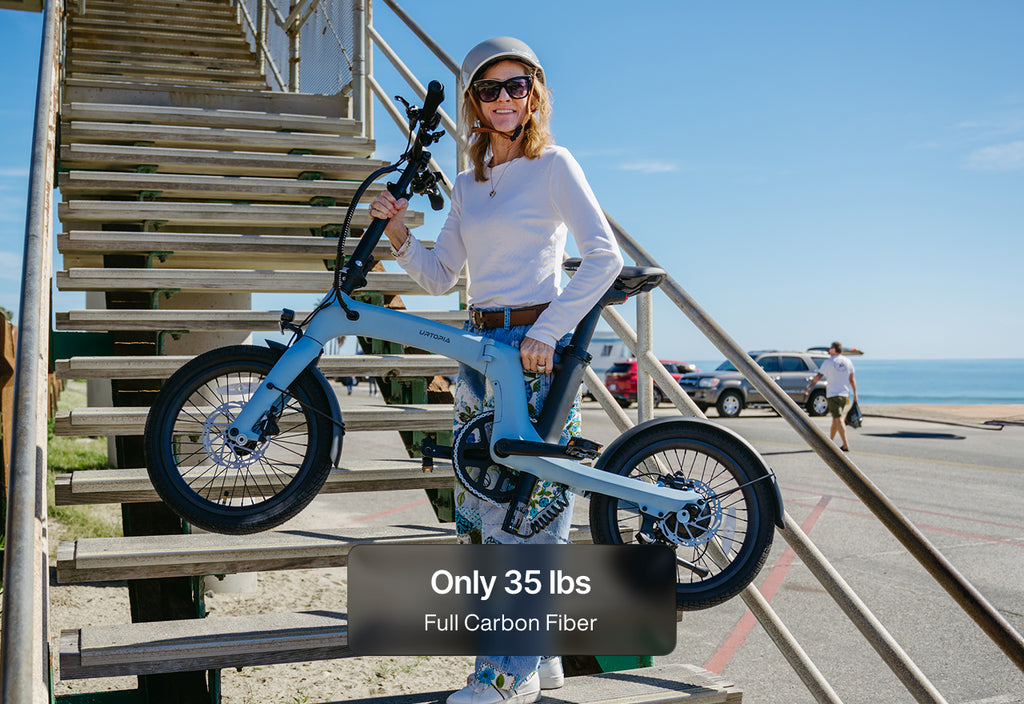
The Carbon Fold 2 E-Bike is a strong example, as its lightweight 35 lbs design and carbon fiber frame make it easier to carry, store, and use in city settings. Its torque sensor also helps the pedal assist feel smoother and more natural, while the 250W rear hub motor provides enough support for daily trips without taking away the familiar feel of cycling.
A Class 2 eBike offers more convenience for riders who want extra flexibility in daily city use. These bikes come with a throttle feature, so the motor can propel the bike without pedaling when needed, which is especially useful when starting from a stop or moving through congested streets.

Ebikes like the Carbon Classic E-Bike combine both throttle and pedal assist, giving riders more options for city commuting. Its lightweight 38 lbs carbon fiber build also makes it easier to handle, while the 750W peak motor with 60Nm of torque delivers smooth, responsive power for urban riding. With up to 75 miles of range, it’s also a practical choice for longer commutes and everyday use.
A Class 3 eBike offers stronger performance for riders who want faster commuting and better long-distance capability. With pedal assist reaching higher speeds, these bikes make daily rides more efficient, especially for longer urban routes and regular commuting.

The Carbon Fusion Pro E-Bike is built for this kind of riding, combining a 500W rear hub motor with 1000W peak power and 60Nm of torque for stronger support on the road. Its pedal assist can reach up to 25 mph upon unlock, while the range of up to 75 miles, or up to 120 miles with a dual battery setup, makes it a practical option for riders who need both speed and extended coverage.
The final decision on the appropriate eBike type is the result of where and how you ride. Class 1 bikes come very handy in casual commuting and shared routes, Class 2 models offer additional throttle control and Class 3 bikes are perfect in faster urban travel and in extended routes.
eBike Class Laws and Regulations
Even though the system of three classes is mostly applied, the local laws and transportation policies may make certain rules to differ.
eBike Lane Restrictions
Numerous cities permit Class 1 and Class 2 bicycles on bike lanes and shared ways. Class 3 bikes are typically permitted on the roads and bike lanes that are found beside streets, though may not be permitted on multi-use trails where walkers are frequent.
The local governments usually impose such limitations to help maintain safety in places where the cyclist, walker and other recreational users share.
Age Restrictions
In certain states, there are minimum age requirements on faster evolved bikes. For example, riders may need to be at least 16 years old to operate a Class 3 ebike due to its higher assisted speed.
Class 1 and Class 2 bikes usually have less age limitations therefore allowing them to be used by more riders.
Helmet Requirements
Helmet laws differ based on geographical area and type of e-bikes. Most jurisdictions mandate riders who are below a specified age to ensure that the helmet is on, and the Class 3 riders of the ebike must wear a helmet since they move at a high speed.
It is highly recommended to wear a helmet among all the riders regardless of whether it is legally mandated or not.
FAQ
Do you need a helmet for a class 3 ebike?
The Class 3 ebikes riders use helmets in most locations because in these bikes there are certain locations which could reach high velocities. The local laws also have the capability of enforcing the use of helmets among the riders who have reached a specific age.
How do you know if your e-bike is a class 3?
The majority of manufacturers also place a label on the bike frame which indicates the type of ebikes, motor power and the speed that it can assist with. An ebike Class 3 will usually mark the pedal aid up to 28 mph.
How many watts is best for an ebike?
The 250 to 750 watt motors are recommended to most riders to take them to work and as an extra to hilly climbs and even to ride on a day-to-day basis.
Do you have to pedal an electric bike?
It depends on the class. Class 1 and Class 3 ebikes have a motor that aids in the peddling effort of the bike, whereas Class 2 bikes use a throttle without the use of peddling.
Conclusion
When picking out the correct electric bicycle it is important to understand the various types of ebikes. The three-class system assists in establishing the manner in which the motor aids the rider, the speed at which the bike is capable of moving and legal areas of its use.
Class 1 bikes bike models have natural pedal support that can give those a convenience to leisure and daily riding, Class 2 bikes model have throttle convenience that is added and Class 3 bikes have higher speeds that can help people commute faster. You may choose the type of the ebike, which may be best suited in your transportation and lifestyle, depending upon your habit of riding, the routes of frequent use, and the local regulations.


